



Inhalt
Case Study

A food science lab added water contact angle to its tests on crop waste packaging films, and has published seven papers that used the Dropometer.

Last Updated
October 18, 2026
Industrie
Food science and sustainable packaging research
Location
Brookings, South Dakota, USA
Customer since
September 2023
Published with the Dropometer
7 peer reviewed papers
Image credit
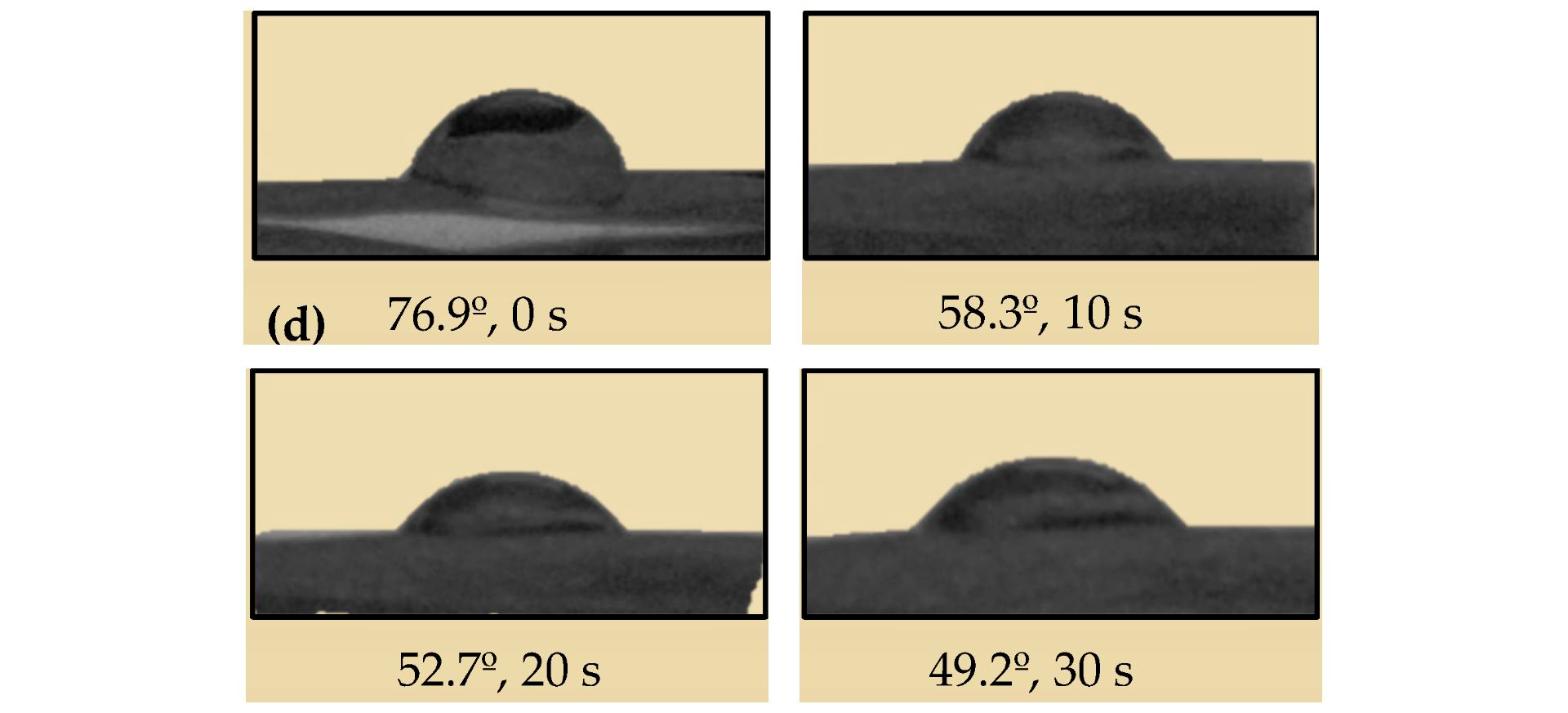
Fig. 3d, Regmi, Paudel and Janaswamy, Foods 13 (2024) 4000, CC BY 4.0, cropped and rearranged
Drop shape method validated against a KRÜSS DSA100E in peer review Published contact angle accuracy of 0.35° 2 peer reviewed validation papers

Prof. Srinivas Janaswamy's group at South Dakota State University turns corncob, soyhull, alfalfa and wheat straw residues into biodegradable packaging films. The group wanted to measure how water meets each new film, in its own lab and within grant funds. Since September 2023 it has used a Dropometer for water contact angle. Seven papers from 2024 to 2026 used the instrument, and three read the same drop over 30 s.

Four Dropometer drop images on soyhull lignocellulose film: 76.9 degrees at 0 s, 58.3 at 10 s, 52.7 at 20 s and 49.2 at 30 s
Abhimanyu Foto
Geschrieben von
Abhimanyu Bhandankar
Holds an MBA from Schulich School of Business and a BE in IT. He joined Droplet Lab in July 2019 and now leads sales and marketing.
CEO at Droplet Lab
Weiterlesen
Gurdeep-Saini-Photo
Technical Review by
Gurdeep Singh Saini
Holds a BASc in Mechanical Engineering from Ryerson University (now Toronto Metropolitan University) and an MASc from York University. He develops the automatic edge and baseline detection behind the Dropometer's analysis.
COO at Droplet Lab
Weiterlesen
Abhimanyu Foto
Written By

Abhimanyu Bhandankar

CEO at Droplet Lab

Holds an MBA from Schulich School of Business and a BE in IT. He joined Droplet Lab in July 2019 and now leads sales and marketing.

Gurdeep-Saini-Photo
Bewertet von

Gurdeep Singh Saini

COO at Droplet Lab

Holds a BASc in Mechanical Engineering from Ryerson University (now Toronto Metropolitan University) and an MASc from York University. He develops the automatic edge and baseline detection behind the Dropometer's analysis.

Primary outcome: wetting read over time, not as a single number

Water contact angle on soyhull lignocellulose film, 0 to 30 s

Dropometer, water, triplicate (Foods 2024, Fig. 3d)

At 0 s 76.9 ± 1.8°
At 30 s 49.2 ± 1.3°

A single first reading would describe this film at about 77°. Read over 30 s, the same drop fell to 49.2 ± 1.3° as the film took up water. The group then used the same 30 s protocol on alfalfa film (78.9° to 54.5°, 2025) and on wheat straw film (77.3° to 65.6°, 2026), where it also fitted a wetting rate constant of k = 0.005 s⁻¹.

7 papers

Peer reviewed papers from the group, 2024 to 2026, that used the Dropometer.

4 crop residues

Corncob, soyhull, alfalfa and wheat straw, each turned into packaging film and wetting tested.

10 formulations

Alfalfa films with three carrageenan types, ranked from 74.7 ± 0.4° to 60.9 ± 0.1° with Tukey groups.

30 s time series

Readings at 0, 10, 20 and 30 s in three papers from December 2024, showing how fast each film takes up water.

Executive Summary

Who

Prof. Srinivas Janaswamy's group in the Department of Dairy and Food Science at South Dakota State University, Brookings. The group turns crop and processing residues, corncob, soyhull, alfalfa and wheat straw, into biodegradable packaging films and tests them on fresh produce such as raspberries and grapes.

Problem

Packaging films made from cellulose attract water, and a film that touches fresh produce must manage moisture. The group already measured water vapor permeability, solubility and absorption. It needed a direct reading of how water meets each new film surface, in its own lab and within existing grant funds.

Lösung

A Dropometer configured for contact angle and surface tension, with an automatic dropper, Hamilton syringes and a dedicated phone, paid in July 2023. In the papers, a water drop is placed on the film with the Dropometer dropper, imaged with the phone and analysed in the sessile drop software.

Time to Value

9 June 2023: first quote request. 15 June 2023: call with Prof. Janaswamy. 3 July 2023: order paid. September 2023: instrument received, onboarding scheduled for 25 September. 2024: first Dropometer results published (Food Chemistry). 1 September 2026: seventh paper published (Foods).

Results

Water contact angle now sits beside strength, barrier and biodegradation data in seven papers from 2024 to 2026. First readings run from about 61° to 79°, all hydrophilic. From December 2024 the group added 30 s time series, and in 2026 a wetting rate constant.

Highlights

7

Papers that used the Dropometer

4

Crop residues tested

10

Film formulations compared

0 to 30 s

Same drop read over time, in three papers

South Dakota State University, at a glance

Research focus

Biodegradable food packaging films from cellulose and lignocellulose extracted from crop and processing residues.

Products / applications

Films for fresh produce. Shelf life trials used raspberries (2024) and grapes (2026), against polystyrene film and uncovered fruit.

Measurement stage

Formulation research: each optimized film is characterized for strength, barrier, optical, water related and biodegradation properties.

Users

Students in one research group; Sandeep Paudel, Sumi Regmi and Sharad Bhattarai are first authors across the seven papers.

Materials and surfaces tested

Cast films from corncob, soyhull, alfalfa and wheat straw residues, crosslinked with calcium chloride and plasticized with sorbitol or glycerol; blends with carrageenan and chitosan.

Key constraints

Purchase funded from existing grants; thin, hydrophilic films, about 0.03 to 0.08 mm, that take up water within seconds.

The challenge: packaging films from crop waste have to be tested for how they meet water

Hydrophilic films change within seconds of touching a drop.

Cellulose films and water

Films made from crop residue cellulose attract water. That helps them break down in soil: about 90% or more within 25 to 40 days in the group's tests. Packaging that touches fresh produce must still manage moisture, so the group wanted to know how each new formulation meets water. It is the question behind water resistance testing of biodegradable packaging film, and a common one across farming and agriscience materials.

Why these films are hard to measure

A water drop on a hydrophilic film spreads and soaks in within seconds. On soyhull lignocellulose film the published angle falls from 76.9 ± 1.8° to 49.2 ± 1.3° in 30 s. One late reading would understate how the surface first meets water, and one early reading would hide how fast it changes. That is why wettability on such films needs a time stamp, as the contact angle measurement guide explains. The films are also thin, about 0.03 to 0.08 mm.

What was at stake

Several of the group's papers compare their films with low density polyethylene, which sits near 100° in the literature they cite. Each new formulation also had to be compared with the last one, much like comparing treated and untreated surfaces in a teaching lab. A reading of its own lets the group place every film on the same scale.

What success would require

A contact angle reading the group could run in its own lab on every optimized film, repeatable enough to compare formulations, and affordable from existing grant funds. Flat, clean film samples matter here, as our guide to sample preparation and contamination control explains.

The insight: read the drop over time, not once

What Was Deployed

Dropometer contact angle and surface tension kit, delivered configuration (paid July 2023): contact angle and surface tension software, an automatic dropper, Hamilton syringes and a dedicated phone, shipped to Brookings, South Dakota. In the papers, the film is placed on the Dropometer mount, a water drop is added with the dropper (0.05 µL precision, as three papers state), and the phone image is analysed in the sessile drop software. The first paper cites the published Dropometer protocol (Chen, Muros-Cobos and Amirfazli, Review of Scientific Instruments, 2018). Our analysis of each paper: corncob films for raspberry preservation (Food Chemistry, 2024); soyhull cellulosic residue films with UV protection (Food Chemistry, 2024); soyhull lignocellulose films (Foods, 2024); alfalfa lignocellulosic films (Applied Sciences, 2025); and alfalfa and carrageenan blend films (Sustainable Food Technology, 2026). Labs that test paper based packaging can compare this sessile drop method with TAPPI T 458 and ASTM D724.
The Origin

From no publications to seven papers

On 9 June 2023 Sandeep Paudel, a student in Prof. Janaswamy's group, asked Droplet Lab for a quote. On 15 June Prof. Janaswamy booked a 15 minute call to learn about the contact angle instrument. "We have some biodegradable films. So, we would like to measure the contact angle and look at the hydrophobicity," he said, adding that the films could be less than one millimetre thick. Other measurements could wait: "at this moment we are predominantly looking for the contact angle."

Near the end of the call he raised a fair concern: "I did not see any publications that has used this instrument." The same day he received the validation paper and datasheet, with quotes for contact angle and surface tension, with and without an automatic dropper. Once the configuration was matched to the grant, the order was paid on 3 July 2023, and the instrument reached Brookings in September 2023.

In 2024 the first Dropometer results appeared in Food Chemistry, in a paper on corncob films that delayed visible spoilage of raspberries by 7 days compared with polystyrene film at room temperature. Three years after that call, his group had published seven papers that used the Dropometer.

Decision Rationale

The automatic dropper, made to fit the grant

Three configurations were discussed in June 2023.

Option 1

Manual dropper

Contact angle and surface tension, with drops placed by hand. Within grant funds.

Not chosen: the group wanted automatic drop placement.
Option 2

Add a sliding stage

Quoted on 12 June 2023 alongside contact angle.

Not chosen: the focus stayed on contact angle.
Option 3

Automatic dropper within grant funds

Contact angle and surface tension with an automatic dropper, Hamilton syringes and a dedicated phone.

Chosen
The group chose the configuration with the automatic dropper and fitted it to existing grant funds. Sliding angle was left out, and it does not appear in the published work. Surface tension software came with the order, while the six papers we could read report water contact angle only. Labs comparing research instruments can read the buying guide to contact angle goniometers for advanced research.

Next Step

Developing new films and need to know how each one meets water?

A contact angle time series shows how fast a film takes up water, not just where it starts. The Dropometer measures contact angle, surface tension, surface energy and sliding angle in one kit, with a drop shape method validated against a KRÜSS DSA100E in peer review. Setup takes about 2 minutes. Book a 15-minute consult about one of your films.

Before vs After

Metric Before After
Wetting check on a new film Wanted, with no instrument chosen yet (call, 15 June 2023) Sessile water drop on the Dropometer for each optimized film
Time behaviour Not measured Angle at 0, 10, 20 and 30 s in three papers; wetting rate constant k = 0.005 s⁻¹ (2026)
Comparing formulations Not measured Ten alfalfa and carrageenan films, 74.7 ± 0.4° to 60.9 ± 0.1°, sorted into Tukey groups
Benchmark Not available Films compared with LDPE at 98.6° and 100.7°, literature values cited in the papers
Drop placement Not applicable Dropometer dropper, given as 0.05 µL precision in three papers
Reporting No Dropometer data yet Contact angle reported beside strength, barrier and biodegradation tests

Rollout timeline

Timeline (high level)

9 to 15 June 2023: Evaluation

  • Student quote request on 9 June
  • Quotes for contact angle and sliding angle on 12 June
  • Call with Prof. Janaswamy on 15 June; contact angle and surface tension quotes, validation paper and datasheet sent

15 June to 4 July 2023: Purchase

  • Configuration with automatic dropper matched to existing grant funds
  • Order paid in full by 4 July 2023

September 2023: Delivery and onboarding

  • Instrument received in Brookings in mid September
  • Onboarding video call scheduled for 25 September 2023

2024: First results

  • Corncob films (Food Chemistry): 63.4°, n = 3
  • Soyhull cellulosic residue films (Food Chemistry): 72.6°, compared with LDPE at 98.6°
  • Soyhull lignocellulose films (Foods, December): first 0 to 30 s time series

2025: Time series as routine

  • Alfalfa lignocellulose films (Applied Sciences, November): 78.9 ± 2.3° falling to 54.5 ± 0.4° over 30 s
  • Alfalfa and carrageenan blends: ten formulations compared (Sustainable Food Technology, accepted December 2025)

2026: Wetting kinetics and blends

  • Soyhull films reinforced with chitosan (Food Bioscience; public abstract only)
  • Wheat straw films (Foods, September): 77.3 ± 1.9° to 65.6 ± 1.8° over 30 s, wetting rate constant k = 0.005 s⁻¹
  • October: the group agrees to share its contact angle data for an open dataset paper

Proof and validation: what the papers show, and what they do not

Test method

Sessile water drop on each optimized film, placed with the Dropometer dropper (0.05 µL precision in three papers), imaged with the phone and analysed in the sessile drop software. From December 2024, readings at 0, 10, 20 and 30 s. In 2026, the decay was fitted to a wetting rate constant. The 2025 alfalfa study reports a lab at 22 ± 2 °C and 47 ± 2% RH.

Sample size and operators

Triplicate in the corncob, soyhull cellulosic residue, Foods 2024 and wheat straw papers. The alfalfa and carrageenan study compares ten formulations with Tukey's HSD at 95% confidence. Operators and drop volume are not reported.

Repeatability / reproducibility

Reported spreads range from ± 0.1° to ± 2.3°. The two 2024 Food Chemistry papers give single values without a spread. Reproducibility across operators: not yet reported.

Notes / assumptions

All films read below 90°, so they are hydrophilic; the authors list more water repellent films as future work. One 2024 abstract lists the 72.6° value under hydrophobicity, while its results call the film hydrophilic. The 2025 alfalfa methods say the angle was recorded immediately, while its results report 0 to 30 s. The carrageenan paper names a dropometer without the maker. For the 2026 chitosan paper, this page uses only the public abstract.

Outcomes to date

Measured Outcomes

76.9° → 49.2°

Soyhull lignocellulose film over 30 s

± 1.8° and ± 1.3°, triplicate (Foods 2024, Fig. 3d). The time series showed how fast the film takes up water, which a single reading would miss.

74.7° to 60.9°

Ten alfalfa and carrageenan films

Control 74.7 ± 0.4°, lowest 60.9 ± 0.1° with 1.5% lambda carrageenan. Carrageenan increased wetting, and the films separated into distinct statistical groups (Sustainable Food Technology, 2026).

k = 0.005 s⁻¹

Wetting rate of wheat straw film

77.3 ± 1.9° falling to 65.6 ± 1.8° over 30 s. The authors read this as controlled water spreading, consistent with the film's low solubility (Foods, 2026).

Operational Outcomes

Longer shelf life

Under the corncob film, raspberries showed spoilage on day 11 at room temperature, against day 4 under polystyrene film (Food Chemistry, 2024).

Biodegradable in weeks

Films lost about 90% or more of their weight in soil within 25 to 40 days across the six papers we could read.

Strength in the plastic range

Optimized films reached tensile strengths from 4.7 MPa (corncob, 2024) to 30.8 MPa (wheat straw, 2026), and several papers compare them with low density polyethylene.

What's next

Delivered

Water contact angle on corncob, soyhull, alfalfa and wheat straw films (2024 to 2026)
0 to 30 s time series and a wetting rate constant
Blend comparisons with carrageenan (2026)

In Pilot

Contributing the group's published contact angle data to an open dataset paper (October 2026)

Planned

More water repellent films, which the authors name as future work

Frequently asked questions

How do you measure contact angle on hydrophilic packaging films?

Read the same drop over time, not once. A water drop spreads and soaks into these films within seconds: on soyhull lignocellulose film the published angle falls from 76.9 ± 1.8° to 49.2 ± 1.3° in 30 s. From December 2024 the group's papers read each drop at 0, 10, 20 and 30 s.

How many papers has the group published with the Dropometer?

Seven peer reviewed papers from 2024 to 2026, on films made from corncob, soyhull, alfalfa and wheat straw residues. First readings run from about 61° to 79°, all hydrophilic.

Which configuration did the group choose?

Contact angle and surface tension with an automatic dropper, Hamilton syringes and a dedicated phone, fitted to existing grant funds. The order was paid on 3 July 2023 and the instrument arrived in September 2023.

Next Step

Developing new films and need to know how each one meets water?

A contact angle time series shows how fast a film takes up water, not just where it starts. The Dropometer measures contact angle, surface tension, surface energy and sliding angle in one kit, with a drop shape method validated against a KRÜSS DSA100E in peer review. Setup takes about 2 minutes. Book a 15-minute consult about one of your films.