Hydrophobicity Classification of Composite Insulators: Contact Angle Tests for Silicone Rubber Insulator Hydrophobicity, Loss and Recovery
Silicone rubber composite insulators stay safe in wet, polluted conditions because water beads instead of forming a film. The spray method gives a hydrophobicity class in the field; lab contact angle and receding angle measurements put a number on hydrophobicity loss, recovery and transfer to pollution layers.
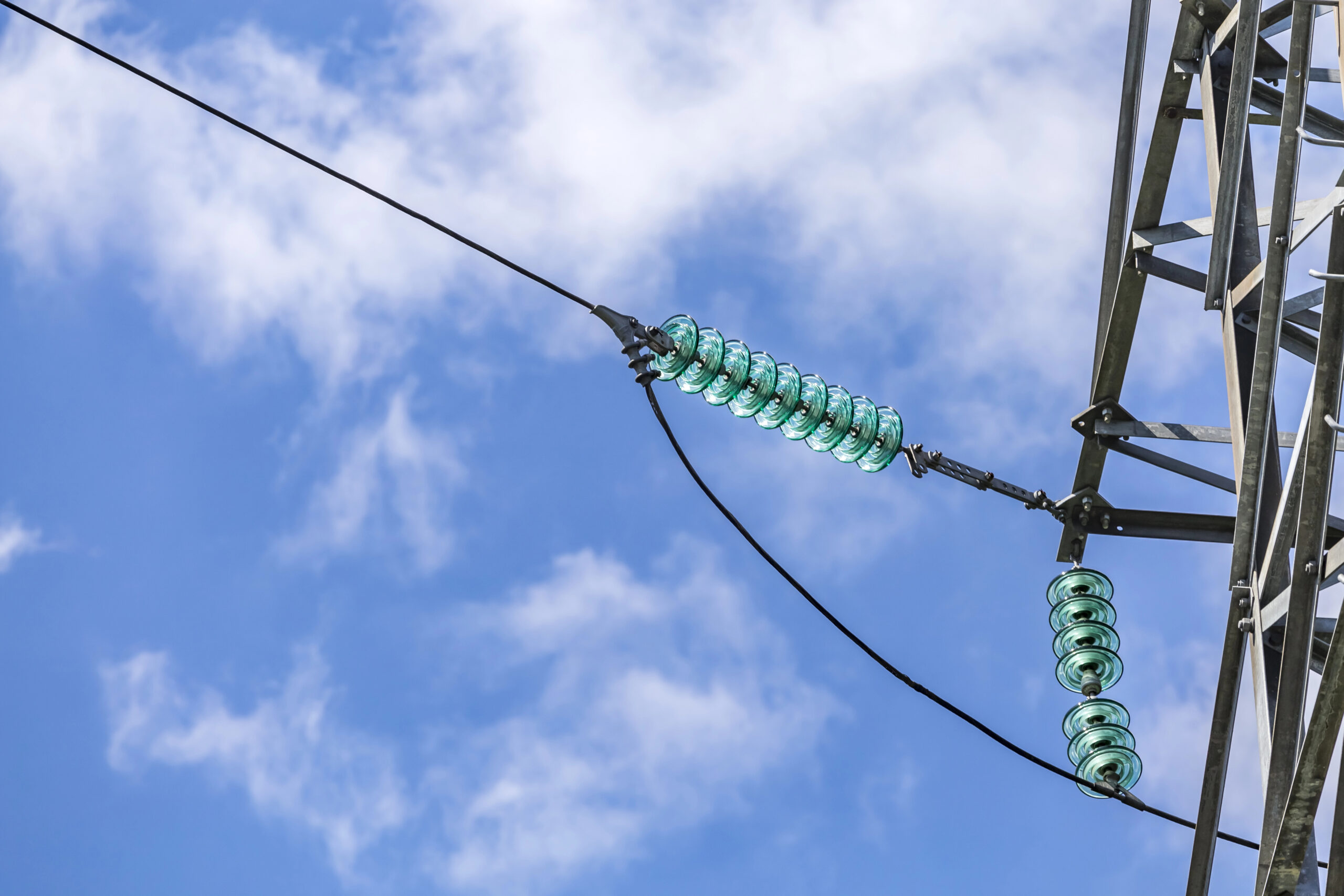
Who this is for: Utility and test laboratory engineers, insulator makers and silicone rubber material developers, and researchers studying ageing of polymeric insulators and outdoor insulator materials.
Where it fits: Material selection and ageing studies, checks on samples removed from service, and calibrating spray method classes against measured angles.
What it does not do: It does not measure live line insulators in the field, and it does not predict flashover on its own.
Das Team des Tröpfchenlabors
Droplet Lab builds precision instruments and software for surface science measurement, specialising in contact angle analysis and surface tension characterisation. Used by researchers across materials science, pharmaceuticals, coatings, and advanced manufacturing, Droplet Lab's Dropometer has contributed to studies published in peer-reviewed journals including Advanced Functional Materials (Impact Factor 19). The team combines instrument engineering with deep domain knowledge in wettability science with a focus on practical accuracy.
Why insulator hydrophobicity matters
About 20° to 120°
rise in static contact angle of a polluted silicone rubber sample within about 20 hours as hydrophobicity transferred into a kieselguhr layer; kaolin reached only 75° after 144 hours.
Meng et al., Polymers 14(13):2519, 2022
Class 2 to 3
spray method wettability class recorded even on failed units, among 37 of 942 damaged insulators on one line, so the field class alone missed the degradation.
Mavrikakis and Siderakis, Energies 19(10):2325, 2026
Sources: Kim J., Chaudhury M.K., Owen M.J., Hydrophobicity loss and recovery of silicone HV insulation, IEEE Transactions on Dielectrics and Electrical Insulation, 1999; Meng et al., Characteristics of small molecule migration of silicone rubber insulator in electrical power systems, Polymers, 2022; Mavrikakis N., Siderakis K., Energies, 2026. Figures come from these sources, not from Droplet Lab measurements.
What this insulator hydrophobicity check does and what it does not
A quick reference for utility and insulator teams checking fit before reading further.
Evidence Box
Insulator hydrophobicity judged only by spray method classes from photographs, with no measured angle to determine the hydrophobicity property of materials, or to compare ageing and recovery.
IEC TS 62073 describes contact angle, surface tension and spray methods. IEC TR 62039 guides polymeric material selection for outdoor use under HV stress.
The Dropometer drop shape method was validated against a KRUSS DSA100E in two peer reviewed papers, in Review of Scientific Instruments and Colloids and Surfaces A.
No insulator case study yet. A GIST membrane lab uses a custom underwater cuvette to measure liquid repellent surfaces with the Dropometer.
No customer insulator paper yet. Published studies measure hydrophobicity loss to near 0° after discharge and recovery over hours to days.
Lab angles describe samples, not installed insulators. Field checks still use the spray method.
What insulator hydrophobicity question are you trying to answer?
Pick the card closest to your role. Each one points to the part of this page that answers it.
Utility or test laboratory engineer
You assess the state of the insulator on lines and in substations and need to know whether a polymeric insulator has lost its hydrophobicity. Lab contact angle on samples from service, beside the spray method, gives a number to trend.
Insulator or silicone rubber maker
You develop silicone rubber insulator housings and coatings and need to show hydrophobicity, loss after corona and recovery. Contact angle over time after ageing tests puts numbers on hydrophobicity recovery and transfer.
Researcher on hydrophobicity classification
You study hydrophobicity detection and the classification of composite insulator hydrophobicity from spray images, including composite insulators on-site and methods using convolutional neural networks. Measured contact angles give the reference labels that image methods are trained and checked against.
Is this the right check for your insulator work?
It measures how water meets an insulator surface sample. It does not test the insulator electrically.
Good fit if
Less relevant if
How contact angle supports insulator hydrophobicity classification
The answer in under a minute.
Measure static, advancing and receding water contact angles on insulator housing samples, new, aged and removed from service, with a locked method. Track the angle over hours after ageing to see recovery, and measure polluted samples to see hydrophobicity transfer. Use the spray method to assess the hydrophobicity class in the field, and the angles to calibrate it.
The Dropometer contact angle and sliding angle kit runs the measurement. The IEC TS 62073 page covers the methods and the IEC TR 62039 page covers material selection. Our contact angle measurement guide und sliding angle guide explain the techniques, and our utilities guide covers the sector.
Expert perspective on repellency
A surface can pin a drop at a high angle yet never let it roll. High repellency and easy roll-off are different properties, and a single contact angle won't tell you which one you have.
Why insulator hydrophobicity is hard to measure
Hydrophobicity is a critical property of composite insulators and of every outdoor insulator made of silicone rubber. On a hydrophobic silicone rubber surface, rain and fog form separate droplets, so leakage current stays low even under pollution. When an insulator begins to lose its hydrophobicity, a degradation of hydrophobicity seen after corona, ageing or heavy pollution, water forms continuous films, leakage current and dry band arcing rise, and the risk of flashover and damage to the insulator grows. Silicone rubber is valued because it can recover the hydrophobicity: low molecular weight silicone migrates to the surface after corona or discharge, and into pollution layers, a hydrophobicity transfer mechanism that makes dirt layers water repellent too; this hydrophobicity transfer property contributes to hydrophobicity recovery of the whole surface. The usual field hydrophobicity test is the spray method in IEC TS 62073, which assigns seven hydrophobicity classes, from HC1, hydrophobicity class 1, to HC7, from the image of the sprayed insulator. It is quick, but HC measurements depend on the experience of the observer, and on one line failed units still read class 2 to 3. With more than 40 million composite insulators in service, a CIGRE study of 84 insulators estimated the average class falls to nearly hydrophilic, HC 6, after about 10 to 25 years, an estimate its authors call indicative. In research on detection and classification of composite insulators, deep convolutional neural networks were used on spray images to classify the hydrophobicity of a composite insulator, reaching about 84 to 90% accuracy; to train the neural network, every image needs a reliable label. Contact angle is the measurement behind the classes. Measured on samples in the lab, static, advancing and receding angles give the precision of hydrophobicity level that classes cannot.
Why insulator hydrophobicity results mislead and what to do
Why:
- Silicone rubber recovers over hours to days after discharge, so the angle depends on when you measure.
How to detect:
- The angle rises between repeat measurements on the same sample.
Corrective action:
- Record time since ageing or removal, and measure at set intervals to follow recovery of hydrophobicity.
Why:
- Dirt layers start hydrophilic and become hydrophobic only as silicone transfers into them.
How to detect:
- Polluted areas read low at first and higher later.
Corrective action:
- Measure clean and polluted areas separately and record the pollution type.
Why:
- Ageing lowers the receding angle first, and static angles hide pinning.
How to detect:
High static angles but drops that do not roll. Our sliding angle guide covers dynamic angles.Corrective action:
- Measure advancing and receding angles, or tilt to find the sliding angle.
Why:
Shed curvature and surface texture change the apparent angle. Our Wenzel model entry and roughness and wetting experiment explain why.How to detect:
- Different spots on one shed read very differently.
Corrective action:
- Cut flat samples where possible and measure several separate areas, as IEC TS 62073 recommends.
Why:
- The spray method relies on judging droplet shape and wet area by eye.
How to detect:
- Two inspectors assign different classes.
Corrective action:
- Calibrate classes against measured receding angles on reference samples.
Why:
Drop volume, timing and water purity change readings. Our guide to reproducible contact angle measurement covers fair comparisons.How to detect:
- A reference sample reads differently between sessions.
Corrective action:
- Write the method down and measure a reference sample every session.
Not sure how to measure your insulator samples?
Send new and aged housing samples, and we will compare them on a call.
What an insulator hydrophobicity record contains
Each measurement produces a record you can file with the insulator or material test report, so hydrophobicity can be trended across ageing and service.
Sample
Insulator type, material, line or test, position on the shed and service time.
History
Ageing test, corona exposure, pollution type and time since the event or removal.
Method settings
Drop volume, static or dynamic angle, tilt rate and read time.
Readings
Static, advancing and receding angles, sliding angle, and the spray class if taken.
Decision
Acceptable, monitor recovery, or investigate the material.
Drop images
Automatic edge and baseline detection gives the same reading from the same image, so a reviewer can recheck any result.
What to measure on an insulator surface
Static water contact angle
Why it matters: It gives a quick hydrophobicity measurement of the insulator under test.
How to interpret: New silicone rubber read about 99° to 108° in published studies; compare with new material measured the same way. Different hydrophobicity levels show as clear steps in angle.
When it is not enough: It hides pinning and does not match the class criteria directly.
Receding angle and sliding angle
Why it matters: Receding and sliding angle show water mobility; IEC TS 62073 notes the receding angle is at or below the static angle.
How to interpret: Ageing widened hysteresis mainly by lowering the receding angle in one study, so a falling receding angle is an early warning.
When it is not enough: Field classes also depend on wet area, not angle alone.
Angle over time after ageing
Why it matters: It shows the ability to recover hydrophobicity after corona or discharge.
How to interpret: Plot angle against hours; recovery took over a hundred hours in one study.
When it is not enough: Recovery in the lab may differ from service conditions.
Angle on polluted samples over time
Why it matters: It shows hydrophobicity transfer into the pollution layer.
How to interpret: Compare pollution types; transfer was faster into kieselguhr than kaolin in one study.
When it is not enough: It does not measure leakage current or insulator surface hydrophobicity in service.
Validated measurement approach for insulator surfaces
How the Dropometer itself has been validated, and how the measurement fits IEC TS 62073.
Peer reviewed method
The Dropometer drop shape method is published in Review of Scientific Instruments and Colloids and Surfaces A. Contact angle was validated against a KRUSS DSA100E, with a published accuracy of 0.35°.
See the validation papersHow it fits IEC TS 62073
IEC TS 62073 describes three methods: contact angle (Method A, static and dynamic), surface tension (Method B) and the spray method (Method C). The Dropometer supports Method A, a technique to assess the hydrophobicity of a polymeric insulator surface, on samples in the lab. The standard notes that precise measurement is difficult on installed insulators, so field checks still use the spray method.
Read the IEC TS 62073 pageHow to measure insulator hydrophobicity in the lab
Six steps per sample. Repeat at set times to follow recovery.
Prepare the sample
Cut a flat sample from the shed or housing, or use a flat test plaque of the same material.
Record the history
Record ageing, pollution and time since the event or removal.
Measure static angles
Measure hydrophobicity using several separate areas and check readings against our reference measurements dataset.
Measure dynamic angles
Measure advancing and receding angles, or tilt to the sliding angle.
Repeat over time
Repeat at set intervals to follow recovery and transfer.
Compare with the spray class
Record the spray method class beside the angles. Our guide to the best contact angle goniometer for industrial QA covers routine use.
We completed our gage R&R study on the unit and it performed very well.
Brandon Barbee
Corporate Quality Engineer, Zeus Industries, Polymer Manufacturing
Download the insulator hydrophobicity SOP
A two page SOP you can adapt for your insulators, with the method lock, static and dynamic angles, recovery timing, a troubleshooting table and a record sheet.
Sliding angle measurement with the Dropometer
Example hydrophobicity recovery log for silicone rubber samples
Example data only. Your values will differ and must come from your own materials and ageing tests.
Corona ageing wetted the surface out; the receding angle recovered over two days. The polluted sample read low at first and rose as hydrophobicity transferred into the layer. The spray class column was assigned by eye on the same samples.
Example insulator hydrophobicity recovery log
| Sample | Condition | Time after event | Static angle (°) | Receding angle (°) | Spray class |
|---|---|---|---|---|---|
| Neu | Unaged | Not applicable | 106 | 88 | HC1 |
| A | After corona | 1 h | 35 | 10 | HC6 |
| A | After corona | 24 h | 88 | 55 | HC3 |
| A | After corona | 48 h | 101 | 78 | HC2 |
| B | Kaolin pollution | 24 h | 62 | 30 | HC4 |
Example data, not customer data. HTV silicone rubber plaques; 5 µL water drops, median of 5 areas; receding angle by volume withdrawal.
The order to check signals on insulator samples
Check these in order. Each one rules out a cause before you look at the next.
Method and reference
Rules out drift in the measurement.
Sample history
Rules out timing after ageing or rain.
Static angle
Gives a quick evaluation of hydrophobicity.
Receding and sliding angle
Shows water mobility and matches class criteria.
Recovery trend
Shows whether the material recovers; our page on transformer oil testing covers another utility check.
Common questions about composite insulator hydrophobicity
Questions utility engineers and insulator makers ask about hydrophobicity classification.
What are the seven hydrophobicity classes?
The hydrophobicity class of polymeric insulators runs from HC1, only separate round droplets, to HC7, a continuous water film over the whole tested area. Classes are judged by eye, and a CIGRE study notes HC measurements depend on the experience of the observer. IEC TS 62073 describes the method, used to measure hydrophobicity of insulators in the field.
Why does silicone rubber recover its hydrophobicity?
Low molecular weight silicone diffuses from the bulk to the surface. Kim and colleagues found diffusion was the key mechanism, with almost total recovery to above 100° advancing angle often taking over a hundred hours. Another study saw fast recovery in the first few hours after corona ageing.
What is hydrophobicity transfer?
Silicone migrates into a pollution layer on the insulator surface and makes it water repellent too. Meng and colleagues found a kieselguhr layer rose from about 20° to 120° within about 20 hours, while kaolin reached only 75° after 144 hours. Transfer depends on the pollution type.
Why measure receding angle, not just static angle?
Because Kim and colleagues found ageing widened hysteresis mainly by lowering the receding angle, and a surface can pin drops at a high static angle. Receding and sliding angle show whether water can move off the surface. Our sliding angle guide explains how to measure them.
Can deep learning replace contact angle?
Not yet as a reference. Published studies using convolutional neural networks on spray images reached 84.29% accuracy on 700 images and about 90% in another study. Image methods split the assessment of composite insulators into detection of composite insulators in the image, detection of insulator sheds, and classification of composite insulators based on the spray pattern. They need labelled images, and measured contact angles are the most reliable labels for detection of hydrophobicity. Lab angles and image classification work together.
Can you measure on installed insulators?
Not precisely. IEC TS 62073 notes measurement with high precision is difficult on insulators installed on an overhead line. Field teams use the spray method; lab teams measure samples removed from service or test plaques with contact angle.
What does a new silicone rubber insulator read?
Published static angles on new silicone rubber range from about 99° to 108°, depending on material and method. Do not use one universal value. Measure new material from the same supplier as your reference, and compare aged samples against it.
Which instrument do we need?
One with static, advancing and receding angles and a tilting stage for sliding angle. The Dropometer does this at the bench. Our page on self cleaning and anti soiling covers related outdoor surfaces, and the ski wax hydrophobicity study und GIST membrane lab case study show other hydrophobic surface work.
What changes when you measure insulator hydrophobicity
Typical changes in how teams work. Benchmarks are given only where a published source exists.
Before and with measured insulator hydrophobicity
| Metric | Before Dropometer | With Dropometer | Indicative Benchmark |
|---|---|---|---|
| Hydrophobicity level | Spray class by eye | Measured static and receding angles | Spray classes alone missed degradation on failed units (Mavrikakis and Siderakis, 2026) |
| Recovery | Assumed | Measured over hours after ageing | Almost total recovery often took over a hundred hours (Kim et al., 1999) |
| Image classification | Visual labels only | Labels checked against measured angles | CNN accuracy 84.29% on 700 images (Kokalis et al., 2021) |
| Material selection | Supplier data | Same method on every candidate | No published benchmark; track on your own materials |
See the measurement on your own samples
Send new and aged housing samples. We will show the comparison on a call.
Estimate the value of earlier insulator action
Enter your own numbers. The result is an estimate, not a Droplet Lab claim.
Insulator intervention estimate
Estimate the value of acting earlier on insulator hydrophobicity loss.
Result
Monthly savings = preventable rework cost + preventable scrap cost + other monthly savings.
What contact angle cannot tell you about an insulator
Honest limits, so you know when to reach for another test.

Contact angle describes how water meets an insulator surface sample, and how ageing and pollution change it. Flashover performance, leakage current, tracking, erosion and insulator performance in service need their own tests.
Standards, evidence and related hydrophobicity workflows
These pages cover the standards for hydrophobicity classification of polymeric insulators, related hydrophobic surface evidence and other outdoor and utility checks.
Standard
IEC TS 62073
Measurement of hydrophobicity of insulator surfaces.
Standard
IEC TR 62039
Polymeric materials for outdoor use under HV stress.
Case study
GIST membrane lab
A custom underwater cuvette for repellent surfaces.
Published paper
Nordic ski glide wax hydrophobicity
Hydrophobicity of waxes across temperatures.
Instrument
Dropometer
Contact angle and sliding angle.
Related use case
Functional hydrophobicity and self cleaning
All hydrophobicity use cases in one place.
Related use case
Membrane hydrophobicity and fouling
Contact angle on membrane surfaces.
Related use case
Self cleaning and anti soiling
Including solar panel surfaces.
Guide
Utilities guide
Surface science for water and power utilities.
How this page was created
Editorial and technical transparency notes for this page.
Drafting assistance
Drafted with Claude Opus 5.5 (Anthropic) using web search for sources, then edited by the Droplet Lab team.
Technical review
Reviewed and edited for technical accuracy by the Droplet Lab Team.
Verification steps
Standard identifiers, units, thresholds and key procedural claims are checked against cited sources before publication.
Updates
Reviewed every 12 months or when the underlying method changes.
Report a correction
Spotted an issue in this summary? Send a correction request and our team will review it.
Correction Request
We work hard to keep this page accurate and up to date. If you spot an error (wrong revision/year, missing requirement, incorrect interpretation, or broken link), tell us and we'll review it.
Contact us to report a correction