





Inhalt

Lebensmittel & Getränke Industrie
The Practical Guide to Surface Science (2026)

?s=100&d=m
Geschrieben von
No biography added yet.
Weiterlesen
?s=100&d=m
Reviewed by
N/A
No biography added yet.
Weiterlesen
?s=100&d=m
Written By

No biography added yet.

?s=100&d=m
Bewertet von

N/A N/A

No biography added yet.

Dies ist ein praktischer Leitfaden zur Oberflächenforschung für Forscher, die in der Lebensmittel- und Getränkeindustrie arbeiten.

In diesem brandneuen Leitfaden erfährst du alles über:

  • Entscheidende Prinzipien der Oberflächenforschung
  • Die Bedeutung von oberflächenwissenschaftlichen Messungen für die Lebensmittel- und Getränkeindustrie
  • Anwendbare ASTM-Normen und -Richtlinien

Lassen Sie uns gleich eintauchen.

Lebensmittel und Getränke skaliert

Executive Summary

What it covers: A practical, Food & Beverages–focused guide to using surface science to understand and improve products and packaging, centered on four core measurements: contact angle, surface tension, surface energy, and sliding angle. It explains what each measurement means, how it’s performed, and where it matters in real manufacturing and QC.
Key insights: Static contact angles can be misleading on real-world surfaces; advancing/receding (dynamic) angles better capture wetting, removal, and surface variability caused by roughness, contamination, and heterogeneity. Young–Laplace fitting is generally more consistent but needs an axisymmetric droplet, while polynomial fitting is more flexible but more sensitive to local defects; dynamic surface tension is critical when interfaces change fast (droplets, bubbles, foams, and drying/evaporation-driven composition shifts).
Business value: Use wettability and interfacial measurements to make outcomes like sauce texture, chocolate finish, and beverage/packaging performance more predictable—reducing trial-and-error and tightening batch-to-batch consistency. In packaging and shelf-life work, quick surface checks (e.g., water contact angle) help detect contamination, treatment drift, and material choices that drive moisture behavior and product waste.
Standards to follow: ASTM D5946 and ISO 15989 provide an auditable approach for measuring water contact angle on corona-treated polymer films (with ISO offering an optional wetting-tension conversion to bridge legacy “dyne level” specs). Follow the reporting checklist (material/treatment history, test conditions, droplet parameters, analysis method, and statistics across multiple zones) and treat contact angle as a QC indicator of wetting—not a standalone proof of adhesion performance.
Bottom line: This is a measurement-first playbook for improving food and beverage products and packaging by quantifying wetting and interface behavior instead of guessing. Apply the four surface measurements with standards-driven reporting and benchmark comparisons to set reliable process targets, spot drift early, and improve quality, shelf life, and manufacturing efficiency.

Kapitel 1: Einführung

Im hart umkämpften Bereich der Lebensmittel und Getränke gibt es immer wieder eine Vielzahl von Hindernissen. Profis in diesem Bereich stehen immer vor komplexen Herausforderungen, die von der optimalen Textur von Saucen bis hin zur Gewährleistung der Konservierung verpackter Produkte reichen.

Die Bedeutung von Oberflächenqualitäten wird in der Kunst der Lebensmittelkreation manchmal unterschätzt. Messungen der Oberflächenforschung wirken sich auf verschiedene Aspekte aus, die von der Textur von Schokolade bis zur Langlebigkeit von Getränken in den Regalen reichen. Durch ein tieferes Verständnis dieser Aspekte könnte man möglicherweise seinen Ansatz für die Lebensmittel- und Getränkeherstellung verändern, was zu einem außergewöhnlichen Qualitäts- und Geschmacksniveau führt.

We use the following surface properties to understand the behavior of Food & Beverages products and improve their quality.

Kapitel 2: Kontaktwinkelmessung

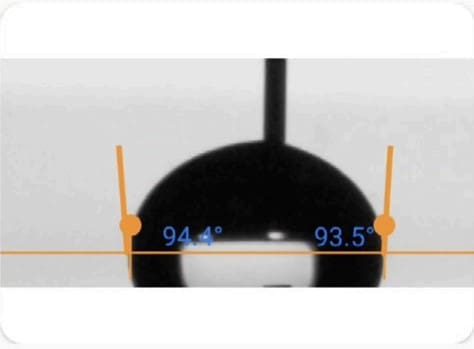
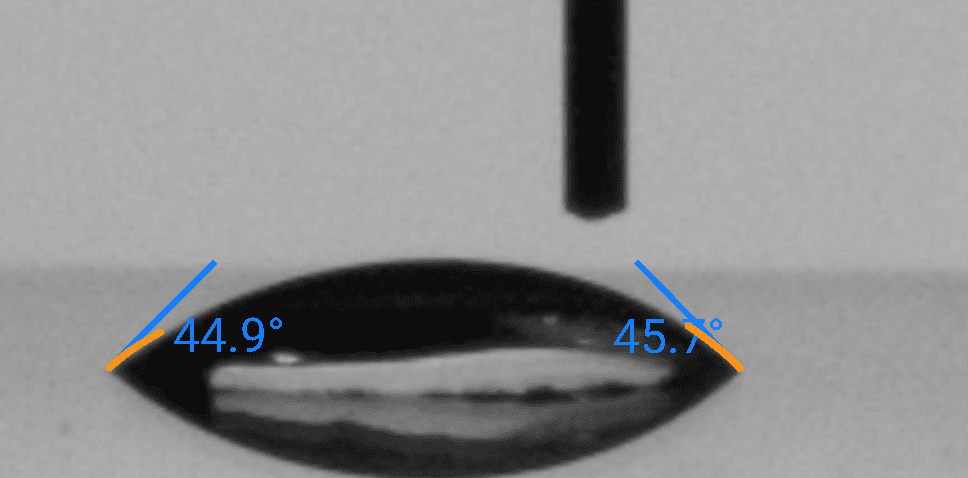
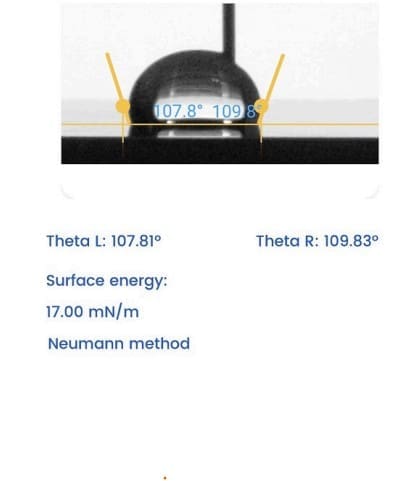
Der Kontaktwinkel quantifiziert die Benetzbarkeit einer Oberfläche, indem er den Winkel zwischen der Oberfläche einer Flüssigkeit und einer festen Oberfläche darstellt.
Dropletlab-Forschung

Sample Image taken from Droplet Lab Tensiometer.

Young – Laplace-Methode

Polynomiale Methode

Dynamischer Kontaktwinkel

Ideally, when we place a drop on a solid surface, a unique angle exists between the liquid and the solid surface. We can calculate the value of this ideal contact angle (the so-called Young’s contact angle) using Young’s equation. In practice, due to surface geometry, roughness, heterogeneity, contamination, and deformation, the contact angle value on a surface is not necessarily a single consistent value but rather falls within a range. The upper and lower limits of this range are known as the advancing and receding contact angles, respectively. The values of advancing and receding contact angles for a solid surface are highly sensitive to many parameters, such as temperature, humidity, homogeneity, and minor contamination of the surface and liquid. For example, the advancing and receding contact angles of a surface can differ at different locations.

Dynamischer Kontaktwinkel versus statischer Kontaktwinkel

Praktische Oberflächen und Beschichtungen weisen von Natur aus eine Kontaktwinkelhysterese auf, die auf eine Reihe von Gleichgewichtswerten hinweist. Wenn wir statische Kontaktwinkel messen, erhalten wir einen einzigen Wert innerhalb dieses Bereichs. Sich ausschließlich auf statische Messungen zu verlassen, wirft Probleme auf, wie z. B. schlechte Wiederholgenauigkeit und unvollständige Oberflächenbewertung in Bezug auf Haftung, Sauberkeit, Rauheit und Homogenität.

In practical applications, we need to understand how easily a liquid spreads (advancing angle) and how easily it is removed (receding angle), such as in painting and cleaning. Measuring advancing and receding angles offers a holistic view of liquid-solid interaction, unlike static measurements, which yield an arbitrary value within the range.

Diese Erkenntnisse sind entscheidend für reale Oberflächen mit Variationen, Rauheit und Dynamik und helfen Branchen wie Kosmetik, Materialwissenschaft und Biotechnologie bei der Gestaltung effektiver Oberflächen und der Optimierung von Prozessen.

Erfahren Sie, wie die Kontaktwinkelmessung mit unserem Tensiometer durchgeführt wird

Für ein vollständigeres Verständnis der Kontaktwinkelmessung lesen Sie unsere Kontaktwinkelmessung: Der endgültige Leitfaden

Open Benchmark Data: Contact Angle & Surface Energy

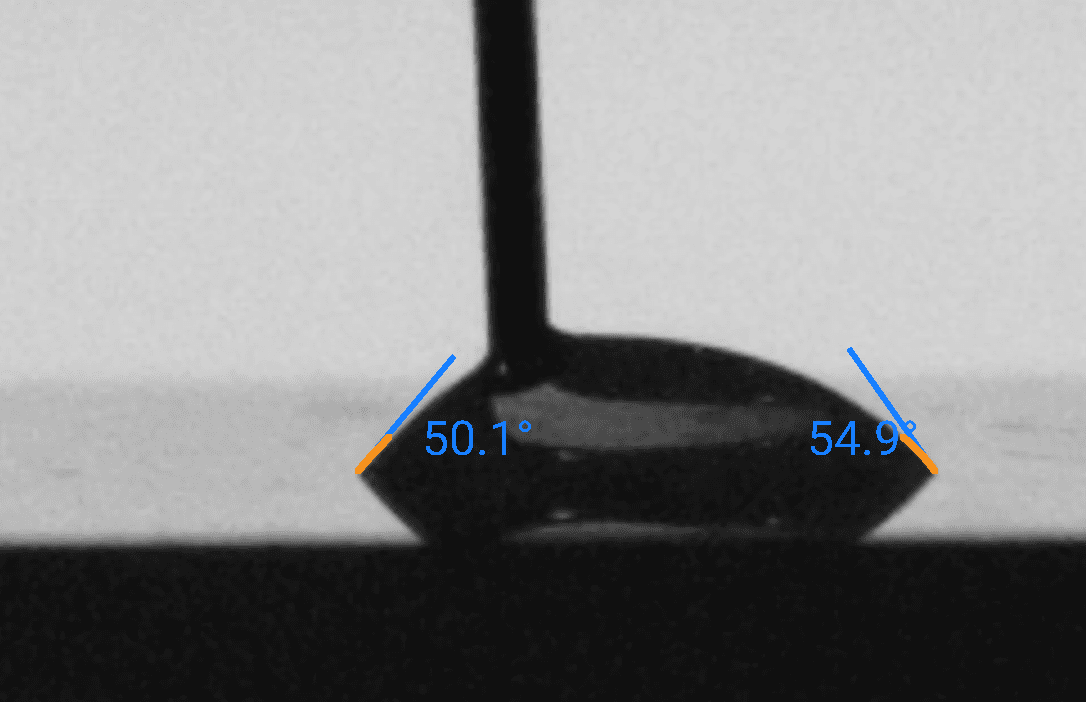
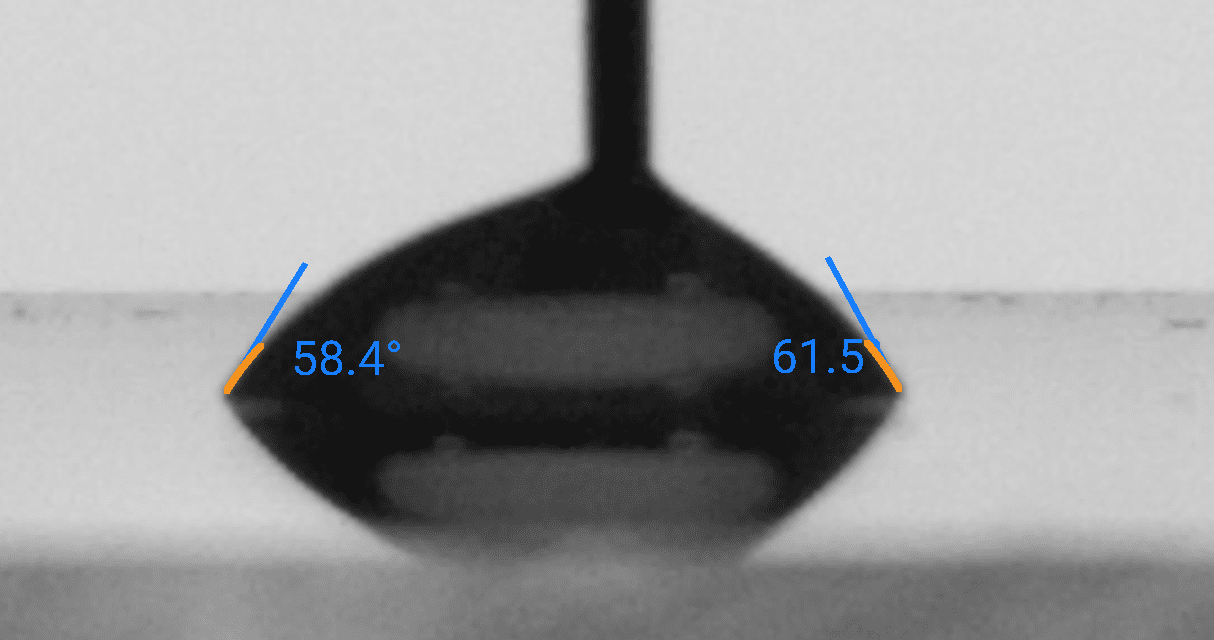
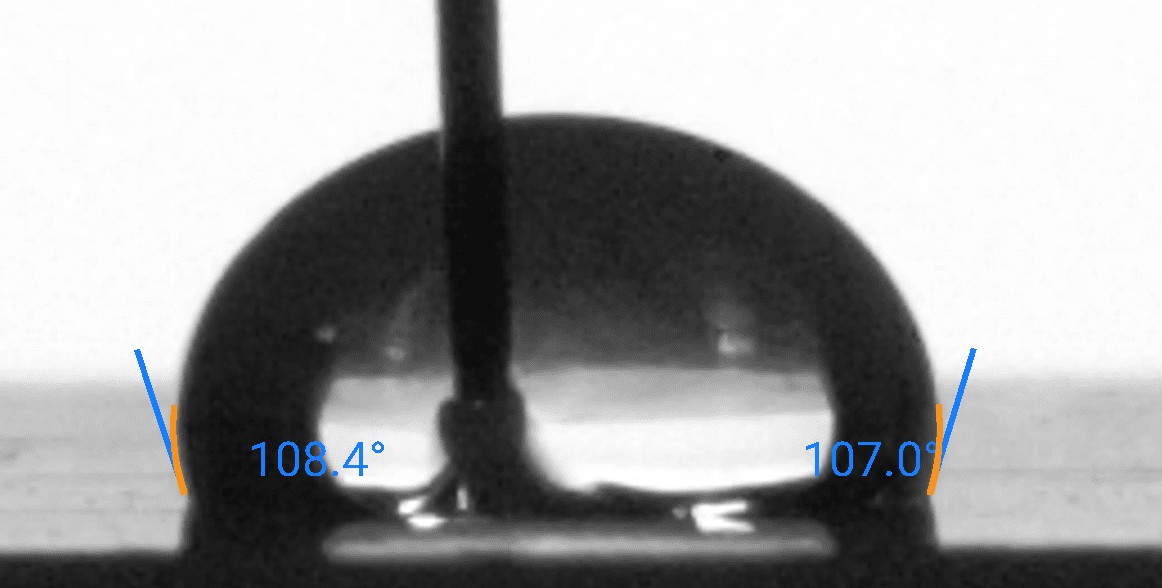
These reference measurements show how deionized water wets four standard substrates measured with the Droplet Lab Dropometer. Use them as visual and numerical benchmarks when you're checking your own sample preparation, treatments, and chemistry.

Full contact angle and surface energy datasets (including additional liquids and statistics) are available on our dataset hub.

Glass - DI Water
Glass - DI Water
Nylon - DI Water
Nylon - DI Water
PMMA - DI Water
PMMA - DI Water
Teflon - DI Water
Teflon - DI Water

The droplet images above are taken from the same benchmark series as our open dataset. For each substrate and probe liquid we report:

● Advancing and receding contact angles (and hysteresis)
● Derived surface energy (SFE) values based on multi-liquid measurements
● Measurement conditions, uncertainties, and sample preparation details

Comparing your own droplet shapes and angles against these references is a fast way to spot contamination, treatment drift, or unexpected changes in wettability.

Kapitel 3: Messung der Oberflächenspannung

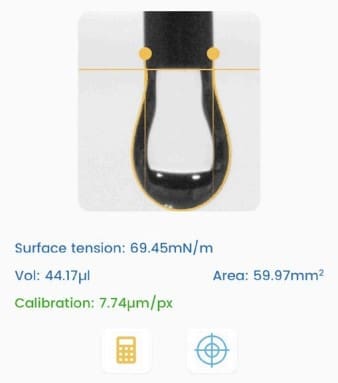
Diese Eigenschaft misst die Kraft, die auf die Oberfläche einer Flüssigkeit wirkt, mit dem Ziel, ihre Oberfläche zu minimieren.

Messung der Oberflächenspannung

Sample Image taken from Droplet Lab Tensiometer

Dynamische Oberflächenspannung

Die dynamische Oberflächenspannung unterscheidet sich von der statischen Oberflächenspannung, die sich auf die Oberflächenenergie pro Flächeneinheit (oder die Kraft, die pro Längeneinheit entlang des Randes einer flüssigen Oberfläche wirkt) bezieht.

Die statische Oberflächenspannung charakterisiert den Gleichgewichtszustand der Grenzfläche von Flüssigkeiten, während die dynamische Oberflächenspannung die Kinetik von Änderungen an der Grenzfläche berücksichtigt. Diese Veränderungen können das Vorhandensein von Tensiden, Additiven oder Schwankungen in Temperatur, Druck und Zusammensetzung an der Grenzfläche beinhalten.

Wann sollte die dynamische Oberflächenspannungsmessung verwendet werden?

Dynamic surface tension is essential for processes that involve rapid changes at the liquid-gas or liquid-liquid interface, such as droplet and bubble formation, coalescence (change in surface area), the behavior of foams, and the drying of paints (change in composition, e.g., evaporation of solvent). It is measured by analyzing the shape of a hanging droplet over time.

Die dynamische Oberflächenspannung gilt für verschiedene Branchen, darunter Kosmetika, Beschichtungen, Pharmazeutika, Farben, Lebensmittel und Getränke sowie industrielle Prozesse, in denen das Verständnis und die Kontrolle des Verhaltens von Flüssigkeitsgrenzflächen für die Produktqualität und Prozesseffizienz unerlässlich ist.

Erfahren Sie, wie die Messung der Oberflächenspannung mit unserem Tensiometer durchgeführt wird

Für ein vollständigeres Verständnis der Oberflächenenergiemessung lesen Sie unsere Oberflächenspannungsmessung: Der endgültige Leitfaden

Kapitel 4: Messung der Oberflächenenergie

Die Oberflächenenergie bezieht sich auf die Energie, die erforderlich ist, um eine Flächeneinheit einer neuen Oberfläche zu erzeugen.
231

Sample Image taken from Droplet Lab Tensiometer

Erfahren Sie, wie die Messung der Oberflächenenergie mit unserem Tensiometer durchgeführt wird

Für ein umfassenderes Verständnis der Oberflächenenergiemessung lesen Sie unsere Oberflächenenergiemessung: Der ultimative Leitfaden

For benchmark contact angle and surface energy values on glass, nylon, PMMA, and Teflon, see the Open Benchmark Data panel above or visit our Dataset Hub for full CSV downloads.

Kapitel 5: Gleitwinkelmessung

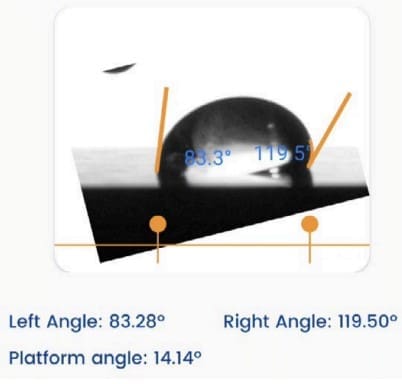
Der Gleitwinkel misst den Winkel, in dem ein flüssiger Film über eine feste Oberfläche gleitet. Es wird häufig verwendet, um die Rutschhemmung einer Oberfläche zu beurteilen.

Gleitwinkel 1

Sample Image taken from Droplet Lab Tensiometer

Erfahren Sie, wie die Gleitwinkelmessung mit unserem Tensiometer durchgeführt wird

Für ein umfassenderes Verständnis der Gleitwinkelmessung lesen Sie unsere Gleitwinkelmessung: Der endgültige Leitfaden

Kapitel 6: Anwendungen in der Praxis

In der Lebensmittel- und Getränkeindustrie gibt es mehrere Fallstudien, die die Vorteile der Durchführung von Messungen der Oberflächeneigenschaften veranschaulichen.

Breathable, biodegradable soyhull-cellulose packaging films validated by contact-angle testing to extend raspberry shelf-life

Post-harvest loss of fruits and vegetables, and health risks and environmental impact of current plastic packaging warrant new biodegradable packaging. To this end, cellulosic residue from agricultural processing byproducts is suitable due to its renewability and sustainability. Herein, soyhulls cellulosic residue was extracted, solubilized in ZnCl2 solution, and crosslinked with calcium ions and glycerol to prepare biodegradable films. The film combination was optimized using Box Behnken Design and film properties were characterized. The optimized film is translucent and exhibits tensile strength, elongation at break, water vapor permeability, hydrophobicity, and IC50 of 6.3 ± 0.6 MPa, 30.2 ± 0.9%, 0.9 ± 0.3 × 10− 10 gm− 1 s− 1 Pa− 1, 72.6◦, and 0.11 ± 0.1 g/mL, respectively. The water absorption kinetics follow the Peleg model and biodegrade within 25 days at 24% soil moisture. The film extends the shelf life of raspberries by 6 more days compared to polystyrene film. Overall, the value-added soyhull cellulosic films are advantageous in minimizing post-harvest loss and plastic-related issues, emphasizing the principles of the circular bioeconomy.

Role of the Droplet Lab Goniometer

The study used a Droplet Lab Dropometer to quantify the water contact angle (WCA) of the optimized soyhull cellulosic residue (SCR) film, as a direct readout of surface wettability / hydrophobicity:

  • Where it’s described: Methods section “2.2.6.5. Water contact angle” (page 4) specifies measuring WCA on the film using a Dropometer (Droplet Lab, Canada), capturing the droplet image via a smartphone interface, and analyzing via sessile drop software.
  • Why it mattered in this work: WCA supported how the film surface interacts with water—an important packaging-relevant property tied to moisture interactions, condensation tendency, and practical barrier behavior for fresh produce packaging.

Key quantitative outcome: The optimized film’s WCA was 72.6° (reported and visualized in Fig. 2f and discussed in the wettability section), indicating a moderately hydrophilic surface (< 90°), which aligns with the film acting as a semi-permeable packaging layer rather than a fully moisture-blocking plastic film.

Key Findings

  • Optimized formulation (SH12) (0.4 g SCR, 500 mM CaCl₂, 1.5% glycerol) achieved:
    • Tensile strength: 6.3 ± 0.6 MPa
    • Elongation at break: 30.2 ± 0.9%
    • Water vapor permeability: 0.9 ± 0.3 × 10⁻¹⁰ g·m⁻¹·s⁻¹·Pa⁻¹
  • Wettability (Droplet Lab measurement): Water contact angle = 72.6°, supporting the film’s moderately hydrophilic surface character (Fig. 2f; discussion in WCA section).
  • Functional performance: Film extended raspberry shelf-life by ~6 days at room temperature relative to polystyrene film (shelf-life study results section; Fig. 4).
  • Sustainability end-of-life: Film biodegraded within ~25 days at 24% soil moisture (biodegradation section; Fig. 2g).
  • Active packaging attributes: Film provided UV protection (transmittance results; Fig. 2c) and measurable antioxidant activity (DPPH IC50 reported in abstract and methods/results).

Why it Matters

For packaging developers and fresh-produce packers, this work demonstrates that agricultural byproduct–derived cellulose films can be engineered (via ionic crosslinking + plasticization) to hit a practical balance of mechanical integrity, breathability (moisture control), and functional protection (UV/antioxidant). The contact angle result (72.6°) provides a quick, quantitative surface check that the film is not excessively hydrophobic (which can trap moisture) nor extremely hydrophilic (which can compromise integrity), helping guide material selection, formulation optimization, and QC specifications for produce packaging where condensation management is critical.

Method Snapshot

  • Sample: Regenerated soyhull cellulosic residue film crosslinked with Ca²⁺ and plasticized with glycerol (cast from ZnCl₂-solubilized cellulose; ethanol coagulation/regeneration).
  • Droplet/angle method: Water droplet, sessile-drop contact angle measurement using Droplet Lab Dropometer with smartphone image capture and software angle calculation (static WCA implied; advancing/receding not indicated).
  • Temperature: Not explicitly stated for contact-angle testing; film drying/storage and several tests were conducted at ~22 ± 2 °C, indicating typical ambient lab conditions.
  • Surface tension: Not measured in this paper (probe liquid was water for contact-angle testing).

Data Note

  • Figure 2f (page 6) shows the water droplet image on the film and reports a water contact angle of 72.6°, which is the measurement performed using the Droplet Lab Dropometer (paired with the method description in section 2.2.6.5 on page 4).
Figure

Citation (APA Format)

Regmi, S., & Janaswamy, S. (2024). Biodegradable films from soyhull cellulosic residue with UV protection and antioxidant properties improve the shelf-life of post-harvested raspberries. Food Chemistry, 460, 140672. https://doi.org/10.1016/j.foodchem.2024.140672

View Publication →

Perfektionierung des Schokoladentemperierens: Herstellung unwiderstehlicher Köstlichkeiten

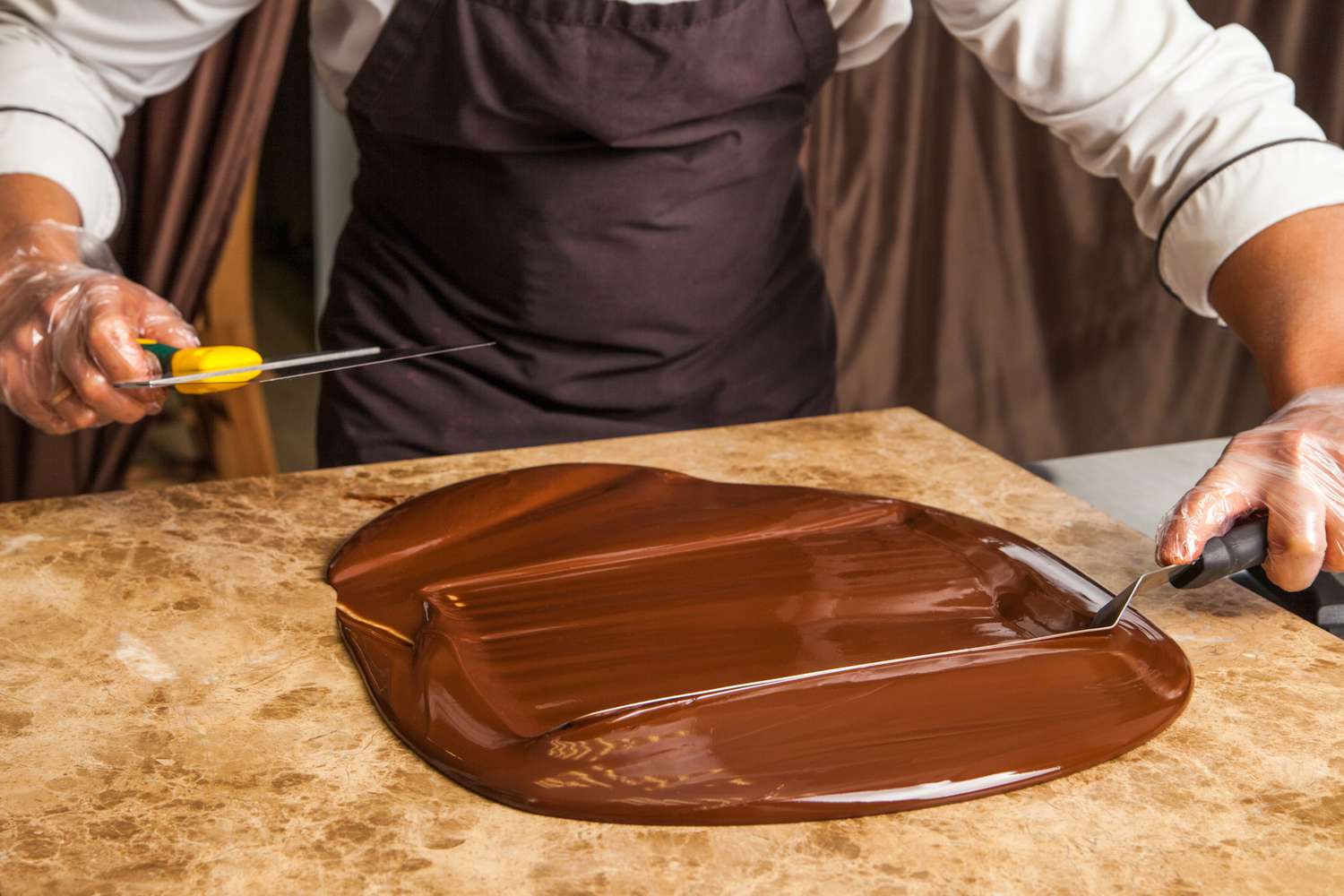
Imagine you're a chocolatier, striving to create chocolates that not only taste exquisite but also have a captivating aesthetic. The technique of chocolate tempering is crucial for achieving the desired texture and glossy appearance. Traditionally, tempering requires precise temperature control, but surface science measurements simplify this process significantly.

Durch die genaue Messung der Oberflächenspannung und der Oberflächenenergie können Sie das optimale Temperament für Schokoladen erreichen. Die Manipulation dieser Oberflächeneigenschaften stellt sicher, dass Ihre Schokoladen eine reichhaltige, angenehme Textur und ein ansprechendes, glänzendes Aussehen haben, das die Verbraucher anzieht. Verabschieden Sie sich von den Inkonsistenzen traditioneller Temperiermethoden und entscheiden Sie sich für einen zuverlässigeren und effizienteren Ansatz, der die Qualität Ihrer Schokoladenkreationen auf ein neues Niveau hebt.

Perfektionierung des Schokoladentemperierens: Herstellung unwiderstehlicher Köstlichkeiten

Getränkekonservierung: Steigerung von Frische und Effizienz

In der Getränkeindustrie ist die Erhaltung der Frische von größter Bedeutung. Für Hersteller von Säften, Erfrischungsgetränken und alkoholischen Getränken ist die Sicherstellung der Frische und Haltbarkeit der Produkte von entscheidender Bedeutung. Herkömmliche Verpackungstechniken greifen oft zu kurz, was zu Ressourcenverschwendung und erhöhten Kosten führt.

Die genaue Kontaktwinkelmessung ermöglicht eine kritische Bewertung der Benetzungseigenschaften von Getränkeverpackungsmaterialien. Dieses Wissen ermöglicht es Ihnen, Materialien auszuwählen, die das Eindringen von Feuchtigkeit effektiv verhindern und so die Qualität und Haltbarkeit Ihrer Getränke verlängern. Diese Praxis reduziert nicht nur den Produktabfall, sondern senkt auch die Verpackungskosten, was letztendlich die finanzielle Leistung des Unternehmens verbessert.

Getränkekonservierung: Steigerung von Frische und Effizienz

Wir sind Ihre Partner bei der Lösung Ihrer geschäftlichen und technologischen Probleme herausforderungen

Wenn Sie an der Implementierung dieser oder anderer Anwendungen interessiert sind, kontaktieren Sie uns bitte.

Kapitel 7: Normen und Richtlinien

In an industry where precision reigns supreme, how can Food & Beverages manufacturers ensure their products withstand scrutiny? The answer lies in standards and guidelines: the compass that guides them through the complex maze of quality and performance.

ASTM D5946 / ISO 15989 — Water Contact Angle on Corona‑Treated Polymer Films (Optional Wetting‑Tension Conversion)

What it is

A test method for measuring the water contact angle (θ) of a sessile droplet on corona‑treated polymer films to verify treatment level and assess wetting behavior. ISO 15989 uses the same water contact angle measurement and adds an optional step to determine wetting tension (γc) from a defined conversion chart (often used to bridge legacy “dyne level” specifications).

When to use it

Corona treatment verification for print/bond readiness

Use when you need an objective, auditable measure of surface wetting on PE/PP/PET (and similar) films instead of subjective dyne-solution observations.

Uniformity control across the web (edge–center–edge / lane mapping)

Use when you need to confirm treatment consistency across web width or over time (shift-start checks, electrode maintenance, storage fade studies).

In-scope / Out-of-scope

In scope
  • Water sessile-drop contact angle on corona-treated polymer film surfaces (θ as the primary measured output)
  • Multiple measurement locations to capture point-to-point variability and nonuniform treatment (mapping is expected for meaningful QC)
  • Reporting treatment level guidance using angle bands (commonly used practical ranges for many low-surface-energy films)
  • Optional ISO output: estimate wetting tension γc from θ using the ISO conversion chart (mN/m = dyne/cm)
Out of scope
  • Claiming adhesion performance from θ alone (contact angle is an indirect indicator; adhesion must be validated with end-use testing/capability studies)
  • Receding angle / hysteresis characterization (this workflow is centered on water contact angle for treatment verification)
  • Direct measurement of liquid surface tension (this is not a tensiometry method)
  • Surfaces with strong chemical affinity for water (ISO notes the method is not applicable in this case)

Minimum you must report (checklist)

  • Film identification: polymer type, structure (mono/multi-layer), surface side tested, and any additives/coatings/primers if known
  • Treatment history: corona/plasma/primer details (if available) and time since treatment (including any storage/aging conditions)
  • Test liquid: DI water (grade/source) and any conditioning steps (e.g., temperature equilibration)
  • Environmental conditions: temperature and relative humidity during test
  • Instrument & method: goniometer/drop shape analysis approach, calculation/fit method, and any software version if applicable
  • Drop parameters: droplet volume, dispense method/needle, and time window used to read/report θ (define your SOP timing)
  • Results & statistics: θ per zone plus summary statistics (e.g., median + IQR or mean ± SD), pass/monitor/fail limits used, and optional γc reported as “derived from ISO conversion chart” if included

Note: Water contact angle is a strong, QC-friendly indicator of surface wetting and treatment consistency, but it is not, by itself, a complete measure of adhesion or print durability. Acceptance limits should be established per film family and end-use via capability studies that correlate θ to real outcomes (ink adhesion, rub resistance, lamination bond strength, etc.).

How to interpret results (guardrails)

  • Treatment level (common practical guide for many low-energy films): θ > 90° marginal/no treatment; 85–90° low; 78–84° medium; 71–77° high; < 71° very high.
  • “Lower θ = better wetting” decision rule: A flatter drop (lower θ) generally indicates higher treatment and lower risk of wetting-related print/bond defects (for polar interfaces).
  • Uniformity matters as much as the average: Treat edge-to-center differences and large spreads as process signals (nonuniform corona, contamination, handling, or aging), not “noise.”
  • Use θ as the primary QC metric; validate performance separately: If customers specify dynes, you may report γc from the ISO chart as a continuity metric—but keep θ primary and confirm adhesion with product-specific testing.

Jetzt sind Sie an der Reihe

We hope this guide showed you how to apply surface science in the Food & Beverages industry.

Nun möchten wir das Wort an Sie übergeben:

Feel free to leave a comment below—we’d love to hear from you.

One Response

Hinterlasse eine Antwort

Deine E-Mail-Adresse wird nicht veröffentlicht. Pflichtfelder sind markiert *


Experiment herunterladen