



Inhalt
Case Study

Seven years, four new surfaces: Concordia's paper sensor lab checked each one with water contact angle.

Last Updated
October 22, 2026
Industrie
Analytical chemistry and paper microfluidics research
Location
Montreal, Quebec, Canada
Customer since
April 2019
Published with the Dropometer
4 papers and 2 theses
Image credit
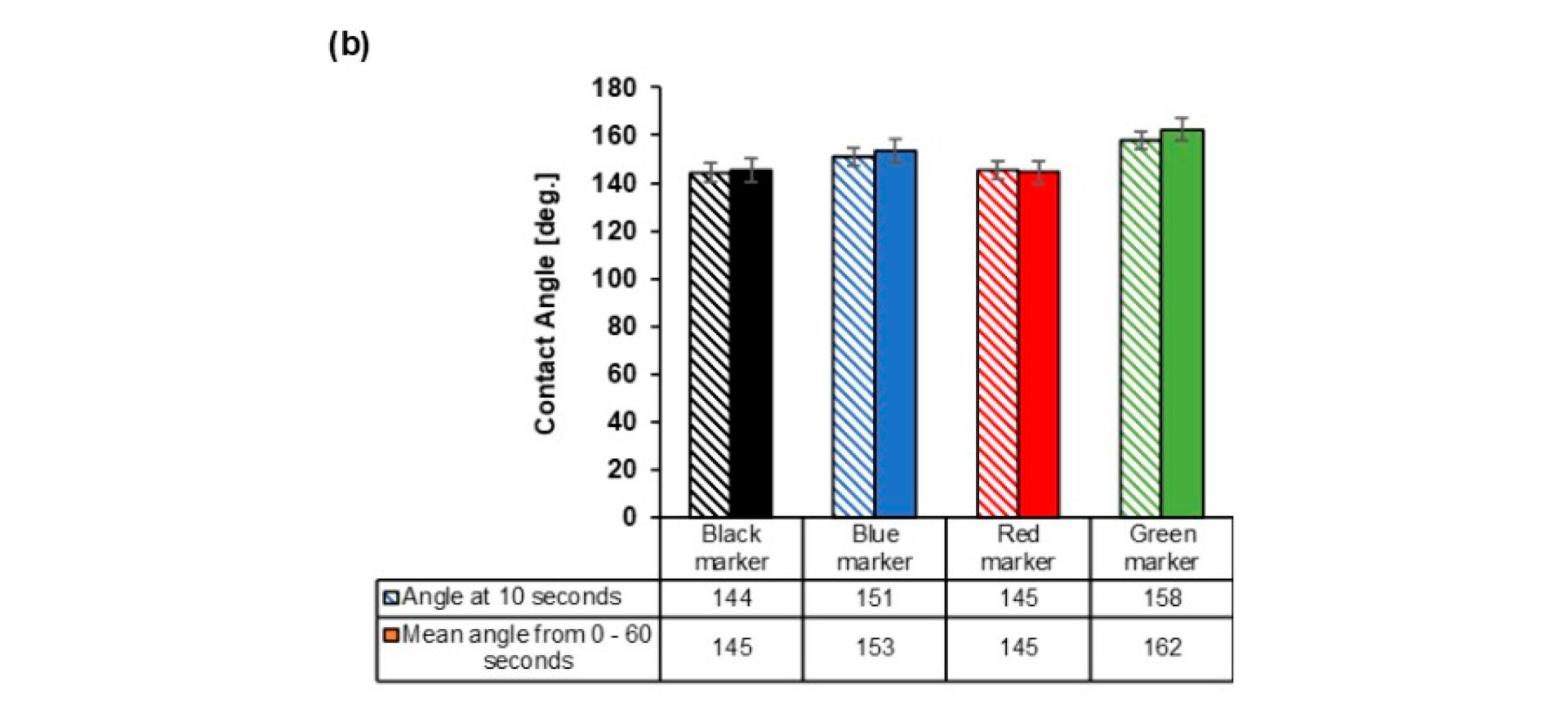
Fig. 3b, Oyewunmi, Safiabadi-Tali and Jahanshahi-Anbuhi, Chemosensors 8 (2020) 97, CC BY 4.0, cropped
Drop shape method validated against a KRÜSS DSA100E in peer review 6 Concordia publications report Dropometer data 2 peer reviewed validation papers: Review of Scientific Instruments and Colloids and Surfaces A

Prof. Sana Jahanshahi-Anbuhi's lab at Concordia University builds low cost sensors on paper. Every device depends on surfaces that either repel water or wick it. Each time the group changed how it made those surfaces, it needed proof the change worked. Dropometer water contact angle readings helped answer that question in four papers and two theses from 2020 to 2026, alongside leak tests, microscopy, porometry and electrochemistry.

Bar chart of Dropometer water contact angles on Whatman Grade 4 paper coated with black, blue, red and green marker: 144, 151, 145 and 158 degrees at 10 s
Abhimanyu Foto
Geschrieben von
Abhimanyu Bhandankar
Holds an MBA from Schulich School of Business and a BE in IT. He joined Droplet Lab in July 2019 and now leads sales and marketing.
CEO at Droplet Lab
Weiterlesen
Gurdeep-Saini-Photo
Technical Review by
Gurdeep Singh Saini
Holds a BASc in Mechanical Engineering from Ryerson University (now Toronto Metropolitan University) and an MASc from York University. He develops the automatic edge and baseline detection behind the Dropometer's analysis.
COO at Droplet Lab
Weiterlesen
Abhimanyu Foto
Written By

Abhimanyu Bhandankar

CEO at Droplet Lab

Holds an MBA from Schulich School of Business and a BE in IT. He joined Droplet Lab in July 2019 and now leads sales and marketing.

Gurdeep-Saini-Photo
Bewertet von

Gurdeep Singh Saini

COO at Droplet Lab

Holds a BASc in Mechanical Engineering from Ryerson University (now Toronto Metropolitan University) and an MASc from York University. He develops the automatic edge and baseline detection behind the Dropometer's analysis.

Primary outcome: contact angle helped explain a weak electrode signal

Oxidation peak current on screen printed paper electrodes

The lab's own cyclic voltammetry, untreated vs water treated (Electrochimica Acta, 2025)

Before 4 ± 2 µA
After 305 ± 18 µA

Screen printed carbon electrodes on paper gave almost no signal. Dropometer water contact angle, read together with SEM and FTIR, helped show why: the dried ink made the paper behind the electrode hydrophobic, at 108 ± 2°, so the sample could not wick. A post printing water treatment kept the paper hydrophilic, while the electrode face read about 110° before and after. The authors attribute the over 75 fold current gain to the paper keeping its wicking.

6 publications

Four peer reviewed papers and two theses from the lab report Dropometer contact angles, 2020 to 2026.

158° green ink

Highest water contact angle of four permanent marker inks on Whatman Grade 4 paper, at 10 s, n = 3.

108° → 109° ± 5°, n = 3

Parafilm before and after the CO2 laser step. The 1° difference sits inside the 5° spread, so no measurable change.

7 years since 2019

Ordered in April 2019 and still used by a PhD student in the lab in October 2026.

Executive Summary

Who

The Jahanshahi-Anbuhi lab, Department of Chemical and Materials Engineering, Gina Cody School of Engineering and Computer Science, Concordia University, Montreal. The group develops portable, low cost chemical and biological sensors on paper: a water hardness test kit, glucose devices with engineered detection zones, and screen printed electrochemical devices.

Problem

Paper sensors only work when water goes where it should. Barriers must repel the sample, the paper under an electrode must wick it, and a valve must hold liquid back until it is opened. The lab changed its fabrication approach four times: marker ink barriers, laser cut Parafilm, screen printed carbon ink, then gelatin valves. Each change raised the same question: did this step change how the surface wets?

Lösung

A Dropometer ordered in 2019, with contact angle, surface tension, surface energy and sliding angle modules. The lab used sessile drop water contact angle as a quick check on each new surface, and published the values with their spread.

Time to Value

2 April 2019: order closed. 9 October 2020: first Dropometer data published (Chemosensors). 7 January 2023: Parafilm laser check published online (Sensors and Actuators B). 23 March 2023: free software update delivered. December 2025: printed electrode study published (Electrochimica Acta). 5 October 2026: gelatin valve study published (RSC Advances). 6 October 2026: the lab confirms a PhD student still uses the instrument.

Results

Green and blue inks were chosen after reading 158° and 151° and passing a leak test. Parafilm read 108 ± 5° before the laser step and 109 ± 5° after, so the step was kept. A 108 ± 2° reading on paper behind printed ink, with SEM and FTIR, helped explain a weak signal that water treatment raised over 75 fold. In 2026, a gelatin valve read 99 ± 6° closed and 39 ± 1° once opened.

Highlights

6

Lab publications with Dropometer data

4

Fabrication changes checked

Over 75×

Electrode signal gain after water treatment

7 years

In use since April 2019

Concordia University, at a glance

Research focus

Portable, low cost colorimetric and electrochemical sensors on paper, for water quality and health testing.

Products / applications

A dip and read water hardness kit with a 0.02 mM detection limit, glucose devices for urine, screen printed electrodes for glucose in cell culture medium, and heat opened gelatin valves for a malathion screening test.

Measurement stage

Material and process selection during device development, before the analytical tests.

Users

Graduate students, from MASc to PhD, in one research group since 2019.

Materials and surfaces tested

Whatman filter paper coated with marker inks; pristine and laser exposed Parafilm; carbon ink screen printed on Whatman Grade 1 paper, front and back; gelatin valves on Whatman Grade 1 paper, closed and opened.

Key constraints

Porous paper that wicks water; barriers must hold aqueous samples; fabrication with an oven, a laser cutter or office supplies.

The challenge: a paper sensor is only as good as its wetting

Every fabrication change could quietly break the device.

The usual barrier method went away

Many paper devices used solid ink wax printers to draw water repellent barriers. Those printers were discontinued, so labs needed new methods. The Concordia group tried two. The first was permanent marker ink drawn on filter paper, suited to labs on a low budget. The second was Parafilm laminated to paper in an oven at 90 °C for 30 min, then cut with a CO2 laser. For plain paper, the angle of contact method is described in TAPPI T 458 cm-24 and ASTM D724 for paper surface wettability, but ink coated and laminated paper needed its own checks.

Paper and ink are awkward surfaces to measure

Filter paper is porous and wicks water. Marker inks differ in resin, pigment and solvent. A laser can change a layer it was not meant to touch, and dried carbon ink can seal the paper underneath it. A visual check cannot rank four inks, or show whether a process step shifted a surface. The same questions sit behind wicking control in paper microfluidic and lateral flow devices, where flow depends on the balance of viscous and capillary forces summed up in the capillary number.

What was at stake

A barrier that leaks ruins the assay. In the lab's own test, red and black marker devices leaked within 4 min. A damaged Parafilm layer would undermine a method that reached barriers 172 ± 15 µm wide. And an electrode that cannot wick gives almost no signal: untreated printed devices read 4 ± 2 µA. The lab's devices test water hardness, glucose in urine and glucose in cell culture medium, the kind of work covered in our surface science guide for biotechnology.

What success would require

A number per surface, with a spread and a sample count, quick enough to compare several inks and process states. The numbers had to stand up in peer review, so readers could check each wetting claim against the published figure. That is the core of reproducible contact angle measurement, and of good contact angle measurement practice in general.

The insight: measure the surface after every fabrication change

What Was Deployed

Dropometer contact angle kit, delivered configuration (order closed 2 April 2019): contact angle, surface tension, surface energy and sliding angle modules. Drops were placed by hand, as this configuration has no automatic dropper or sliding stage. The lab confirmed the configuration in March 2023, when it received a free software update. In the 2020 study, HPLC grade water was dispensed from the sample syringe onto each surface, and images were captured and analysed in the Dropometer contact angle app.
The Origin

A referral, a sensor lab, and a barrier question

Prof. Sana Jahanshahi-Anbuhi's group in Chemical and Materials Engineering at Concordia came to Droplet Lab through a referral. The order closed on 2 April 2019. Her group was developing low cost sensors on paper, where the surface that holds or moves the sample decides whether a test works. Within about 18 months the lab published its first Dropometer data: water contact angles for four permanent marker inks, used to choose the barrier for a water hardness kit. The data appeared in the Chemosensors paper on the marker fabricated water hardness kit on 9 October 2020, and in the MASc thesis on the dual modal water hardness device the same year. Three more studies followed as the lab's fabrication methods changed. The first, the Parafilm heating and laser cutting study in Sensors and Actuators B (2023), found no measurable change in the Parafilm after the CO2 laser step. The second, in Electrochimica Acta, helped explain why screen printed paper electrodes gave almost no signal. The third, the gelatin valve study in RSC Advances (2026), compared water drops on untreated paper, a closed gelatin valve and the valve after heating. In October 2026 the lab confirmed that a PhD student still uses the instrument. Labs weighing a similar purchase can compare options in our guide to the best contact angle goniometer for advanced research.

Before vs After

Metric Before After
Barrier ink Four marker colours, water repellency unknown Green 158°, blue 151°, red 145°, black 144° at 10 s (n = 3); green and blue chosen
Ink stability Unknown whether ink barriers stay repellent while a drop sits Readings over 60 s similar to those at 10 s
Leak check Contact angle alone cannot show a leak Green and blue held dyed water for 4 min; red and black leaked
Laser cutting step Unknown whether CO2 ablation alters the Parafilm 108 ± 5° before, 109 ± 5° after (n = 3); laser settings kept
Printed electrode signal Peak current 4 ± 2 µA, cause unknown Paper behind the dried ink read 108 ± 2°; water treatment kept it wicking; 305 ± 18 µA
Gelatin valve Unknown how a gelatin spot on paper stops liquid wicking Untreated paper absorbed the drop; closed valve 99 ± 6°, opened valve 39 ± 1°; read with porometry and SEM
Reporting No published wetting values for these surfaces Values with spread in four papers: Fig. 3b (2020), Fig. 3A (2023), supporting information (2025), Fig. 5 (2026)

Rollout timeline

Timeline (high level)

2 April 2019: Order

  • Dropometer ordered with four modules on an LG G6 phone
  • Manual drop placement, no automatic dropper

2019 to 2020: Barrier ink selection

  • Four Sharpie marker colours on 2 × 2 cm squares of Whatman Grade 4 paper
  • Water contact angle at 10 s and over 60 s, n = 3
  • Leak test in dyed water for 4 min; green and blue chosen
  • Published in Chemosensors on 9 October 2020; MASc thesis in November 2020

2022 to 2023: Laser process check

  • Parafilm laminated to Whatman Grade 1 paper at 90 °C for 30 min, then cut with a CO2 laser
  • Water contact angle on pristine Parafilm and on Parafilm after ablating a 2.5 × 2.5 cm paper area, n = 3
  • Manuscript received 15 September 2022; published online 7 January 2023

March 2023: Software update

  • Lab confirmed its phone and modules on 23 March 2023
  • Free update with a reworked measurement screen and project search, sent with instructions the same day

2025: Printed electrode diagnosis

  • Carbon ink screen printed on paper; water contact angle on the electrode front and the paper back, before and after water treatment
  • Published in Electrochimica Acta in December 2025; PhD thesis approved 3 December 2025

2026: Gelatin valves, still in use

  • Gelatin valves on Whatman Grade 1 paper; 3 µL water drops on untreated paper, the closed valve and the opened valve
  • Published in RSC Advances on 5 October 2026
  • The lab confirms a PhD student uses the Dropometer and has a recent publication with contact angle data

Proof and validation: what the papers show, and what they do not

Test method

Sessile drop water contact angle. Inks: 2 × 2 cm squares of Whatman Grade 4 filter paper coated with each marker, read at 10 s and over 60 s. Parafilm: a pristine sheet against Parafilm exposed by fully ablating a 2.5 × 2.5 cm area of laminated paper. Electrodes: carbon ink on Whatman Grade 1 paper, front and back, untreated and water treated. Gelatin valves: 3 µL drops on untreated Whatman Grade 1 paper, the closed valve and the valve after heating, analysed in ImageJ.

Sample size and operators

n = 3 per surface in the 2020 and 2023 studies, reported as mean ± standard deviation. n is not stated for the 2025 electrode readings or the 2026 valve readings. Operators are not reported. Drop volume is stated only in the 2026 study, at 3 µL.

Repeatability / reproducibility

Reported spreads of 1° to 6° across the surfaces: 5° on Parafilm, 2° on the paper behind dried ink, 5° to 6° on the electrode face, 6° on the closed gelatin valve and 1° on the opened valve. Ink spreads appear as error bars in Fig. 3b (2020) but are not stated in the text. Reproducibility across operators: not yet reported.

Notes / assumptions

The 1° change on Parafilm sits well inside the 5° spread, so it supports no measurable change, not a precise shift. In the ink study, the leak test together with contact angle settled the choice. In the electrode study, the authors combined contact angle with SEM and FTIR before attributing the signal gain to preserved wicking. In the valve study, the authors read contact angle with porometry and SEM, and state that their data do not show whether wettability or pore pathways dominate valve closure.

Outcomes to date

Measured Outcomes

108 ± 2°

Paper behind dried carbon ink

With SEM and FTIR, this reading helped explain why untreated printed electrodes gave almost no signal. Water treatment kept the paper wicking, and peak current rose from 4 ± 2 to 305 ± 18 µA.

108° → 109°

Parafilm before and after laser cutting

Three repeats each, ± 5°. The authors read this as no meaningful change, so the laser settings were kept for barriers down to 172 ± 15 µm wide.

158°

Green marker ink on filter paper

Highest of four inks at 10 s; blue read 151°, red 145° and black 144°. The leak test agreed: red and black leaked within 4 min.

Operational Outcomes

Process kept

The Parafilm heating and laser cutting method went forward. Devices with segmented detection zones cut the colour gradient from 28.77% to 8.95%, about 69% lower.

Barrier material chosen

Green and blue inks went into the water hardness kit, which reported a 0.02 mM detection limit and errors under 7% against EDTA titration on four tap waters.

Mechanism found

Contact angle, SEM and FTIR together pointed to preserved paper wicking, not a change in the electrode, as the reason water treatment worked.

What's next

Delivered

Barrier ink ranking for the water hardness kit (Chemosensors, 2020)
Before and after check on the laser cutting step (Sensors and Actuators B, 2023)
Wetting diagnosis behind an over 75 fold electrode signal gain (Electrochimica Acta, 2025)
Contact angle readings on a heat opened gelatin valve (RSC Advances, 2026)

In Pilot

Contributing raw drop images and metadata to Droplet Lab's open contact angle dataset (in preparation, October 2026)

Frequently asked questions

How did the lab use contact angle on paper sensors?

Each time the lab changed how it made water repellent barriers, electrodes or valves, it measured water contact angle on the new surface. Over 2020 to 2026 this covered marker ink barriers, laser cut Parafilm, screen printed carbon ink and gelatin valves, reported in four papers and two theses alongside leak tests, microscopy, porometry and electrochemistry.

Did the laser cutting step change the Parafilm?

No measurable change. Parafilm read 108 ± 5° before the CO2 laser step and 109 ± 5° after (n = 3), so the lab kept its laser settings. The result was published in Sensors and Actuators B in 2023.

How long has the lab used the instrument?

The order closed on 2 April 2019. In October 2026 the lab confirmed that a PhD student still uses it. The kit has contact angle, surface tension, surface energy and sliding angle modules, with drops placed by hand.

What did contact angle show about the gelatin valves?

Untreated paper absorbed a 3 µL water drop with no measurable angle. The closed gelatin valve read 99 ± 6° and the valve read 39 ± 1° after it was heated open. The authors read these values together with porometry and SEM. See our analysis of the gelatin valve study.

Next Step

Changing a material or a process step on a surface that must wet, or must not?

A before and after contact angle check shows whether a new step changed the surface. The Dropometer measures contact angle, surface tension, surface energy and sliding angle in one kit, with a drop shape method validated against a KRÜSS DSA100E in peer review. Setup takes about 2 minutes. Book a 15-minute consult about your own samples.